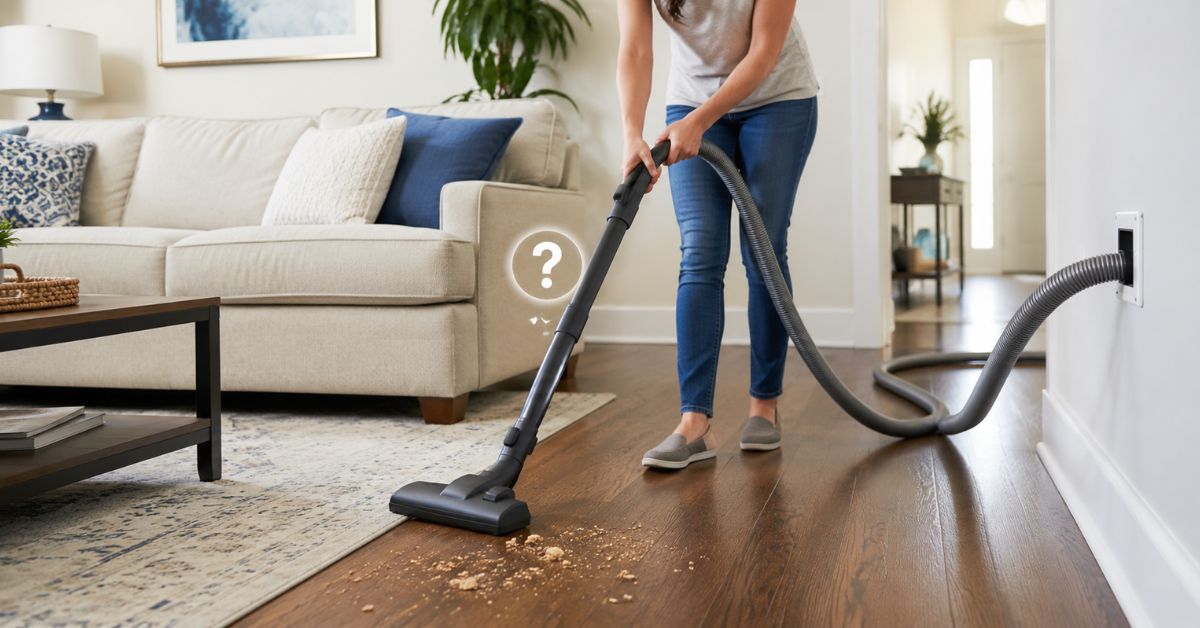
You start cleaning, the motor sounds normal, but the crumbs stay on the floor like they pay rent. That usually means one thing. Your central vacuum has lost airflow somewhere.
The first clue is timing. Sudden suction loss often indicates a clog or a loose seal. Slow suction loss often points to a dirty filter, a worn hose, a small air leak, or an aging motor.
Quick Diagnostic: Is the Problem at the Unit or Downstream?
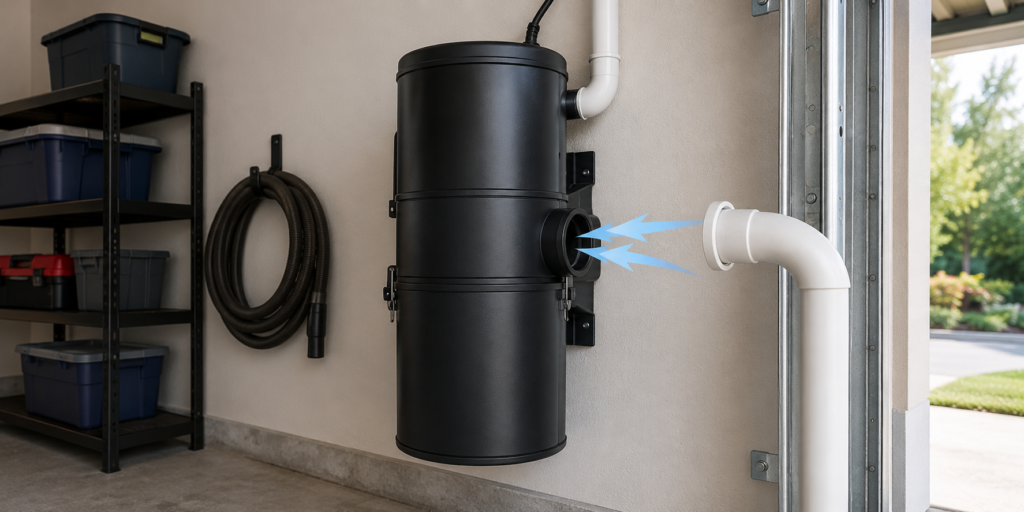
Start at the power unit. This is the fastest way to stop guessing.
Turn the system off. Go to the main unit in the garage, basement, or utility room. Remove the intake pipe or hose connection from the unit. Turn the unit on with the manual switch if it has one. Most central vacuum units have a manual switch, and this test helps determine whether the issue is at the unit or in the hose, pipe, or wall inlet.
If suction is weak at the power unit, the problem is likely inside the unit. Check these first:
- Full bag or dirt bin
- Dirty filter
- Loose lid
- Bad gasket
- Motor issue
- Relay or board issue if the unit will not start
If suction is strong at the power unit, the unit is probably fine. The problem is likely downstream. That means the hose, wall inlet, pipe run, or open inlet.
Next, test the hose. Plug the hose straight into the main unit. If suction drops there, the clog may be inside the hose. Built-in vacuum suggests testing the hose at the main unit because a wall inlet can hide a pipe clog and confuse the test.
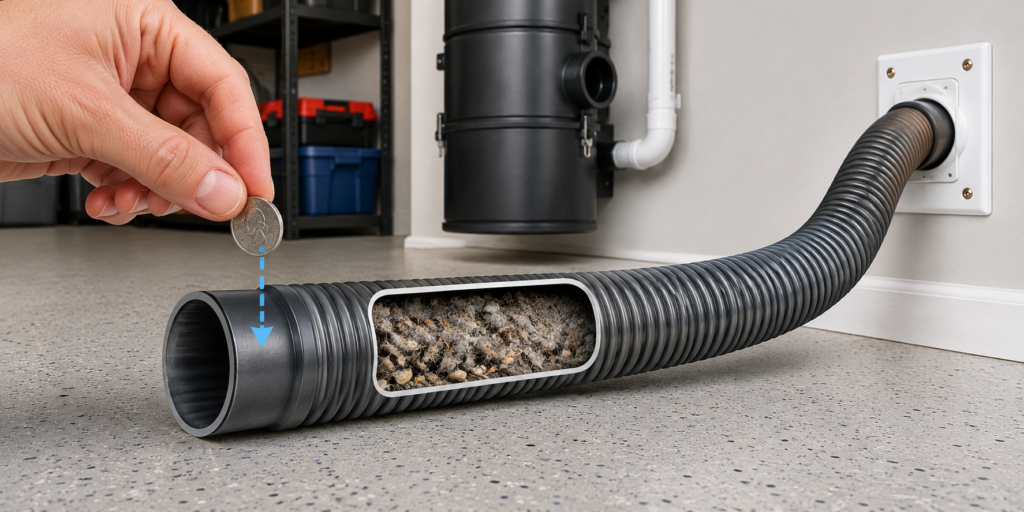
Try the coin test. Drop a coin through the hose from one end. If it does not come out, the hose is blocked.
Try the cuff test too. Turn the hose cuff about 90 degrees at the wall inlet. If suction or power comes back, the issue may be the hose switch or inlet contact, not the motor.
Sudden Suction Loss: 5 Likely Causes + Fixes
The bag or dirt bin is full
A packed bag or bin blocks airflow. Empty the bin or replace the bag. Do not wait until it is stuffed tight. Air needs room to move.
Fix:
- Turn off the unit.
- Empty the bin or change the bag.
- Check for dust packed near the intake.
- Test the suction at the unit again.
The hose is clogged
A hose clog is common because socks, small toys, pet hair clumps, and paper bits love to act like tiny roadblocks.
Fix:
- Remove the hose from the wall.
- Drop a coin through it.
- If the coin gets stuck, the hose is blocked.
- Push the clog out with a long, smooth object.
- Try reverse suction at the power unit if your setup allows it.
Do not use anything sharp inside the hose. A torn hose can cause a second problem right after you fix the first one. Very rude behavior from a hose.
The pipe is blocked
If one wall inlet has weak suction but others work well, the clog may be in that pipe run. If every inlet is weak, the issue may be near the main trunk line or the power unit.
Fix:
- Test each inlet.
- Write down which ones are weak.
- Start with the weakest inlet.
- Try suction from another working inlet.
- Call a pro if the clog is deep inside the wall pipe.
The canister lid is not sealed
A loose lid or a bad gasket can break the suction fast. The motor may sound normal, but air escapes before the system can pull dirt.
Fix:
- Remove and reseat the lid.
- Clean dust from the rim.
- Check the gasket for cracks or flat spots.
- Replace the gasket if it looks worn.
Another wall inlet is open
Central vacuum systems need closed inlets to maintain strong suction. One open inlet can weaken the whole system.
Fix:
- Walk through the home.
- Check every wall inlet.
- Close loose inlet doors.
- Look for cracked inlet covers.
Special Case: Motor Is Running, But There Is No Suction
A running motor does not always mean the system is working. It only means the motor has power.
If the motor runs but there is no suction at the wall inlets, look for an air bypass. That means air is entering or escaping in the wrong place.
Common causes:
- Canister lid is loose.
- The gasket is broken.
- The intake pipe is disconnected.
- Another wall inlet is open.
- The pipe joint has separated.
- Hose has a large crack.
Test at the unit first. If the unit has strong suction there, the motor is not your first suspect. The issue is likely in the hose, inlet, or pipe. If the unit has weak suction at the unit, check the bag, filter, seal, and motor path.
If the motor clicks but does not start, Built In Vacuum notes that motor or relay issues may be present, based on the unit’s sound and behavior.
Gradual Suction Loss Over Time: 4 Causes + Fixes
The filter is clogged
A dirty filter can slowly choke airflow. The system may still run, but pickup gets weaker each month.
Fix:
- Find the filter inside or below the power unit.
- Clean or replace it based on your model.
- Let washable filters dry fully before reuse.
- Never run the unit with a wet filter.
CentralVac recommends cleaning or replacing central vacuum filters every 3 to 6 months, and checking hoses, connections, and wall outlets during routine care.
Motor brushes are wearing down
Some motors use carbon brushes. Over time, they wear down. A weak motor can still run but pull less air.
Fix:
- Listen for a rough sound, sparking, a burning smell, or a weak startup.
- Stop using the unit if it smells hot.
- Call a technician for motor testing.
A small air leak is growing
Small leaks often start after renovations, pest damage, pipe movement, or old fittings. The loss may be slow, so it is easy to miss.
Fix:
- Listen for hissing near wall inlets.
- Check visible pipe joints near the unit.
- Look for loose fittings.
- Check hose cuffs and cracks.
The hose has tiny cracks
A cracked hose leaks air before it reaches the dirt. That makes the whole system feel weak.
Fix:
- Stretch the hose out.
- Bend it slowly under good light.
- Listen for a hiss.
- Replace the hose if cracks are long or near the cuff.
System Keeps Shutting Off? The Blockage Overheat Connection
A central vacuum can shut off when the motor gets too hot. A blocked hose, a full bin, a dirty filter, or a clogged pipe can force the motor to work harder.
Stop using the system if it keeps shutting off. Let it cool. Then check the easy airflow blockers first.
Check in this order:
- Bag or dirt bin
- Filter
- Hose clog
- Wall inlet clog
- Pipe blockage
- Exhaust blockage
- Reset button, if your model has one
If the unit shuts off again after cleaning, call a technician. A motor that keeps overheating may need repair.
How to Find and Fix Air Leaks
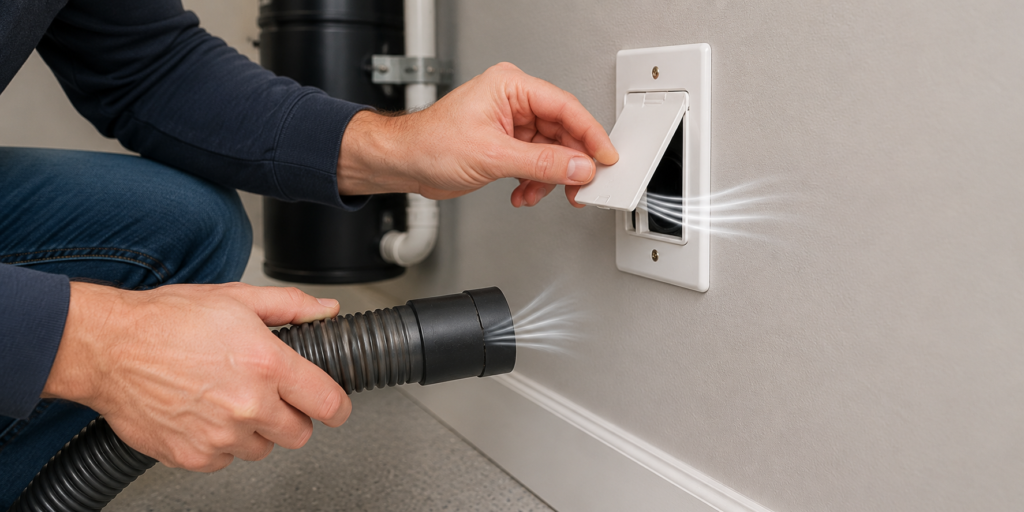
Air leaks usually cause a gradual loss of suction. They are sneaky because the system still runs.
Start with the hose.
Hold the hose near your ear while the unit runs. Move slowly along the hose. A hiss can point to a crack.
Next, check the wall inlets.
A loose or cracked inlet door can cause air leaks. Press the door closed and listen for a change in suction.
Then check the power unit.
Look at the lid, gasket, intake pipe, and visible joints. Dust lines around a joint can also point to leaking air.
You can also use the smoke test.
Light an incense stick near a visible pipe joint while the system runs. If smoke pulls toward the joint, air may be leaking there. Keep flame and heat away from plastic, wires, dust, and the unit. Use care. No hero points for melting a pipe.
Repair Costs + When to Call a Professional
Some fixes cost nothing. Others need tools, parts, or a service call.
Rough cost guide:
- Clear simple hose clog: often free if you do it yourself.
- Professional clog removal: typically $50-$250.
- Hose replacement: often $100-$250.
- Motor repair or replacement: often $200-$800.
- Power unit repair: often $200-$800 or more.
- Inlet valve repair: typically $75-$250.
- Wiring repair: often $100-$450.
These are broad market ranges, and local pricing can vary by model, parts, and access. Angi lists central vacuum repair ranges for clogs, hoses, motors, power units, inlet valves, and wiring.
Call a professional if:
- Every inlet has weak suction.
- You smell burning.
- The motor clicks but does not run.
- The unit shuts off again after cooling.
- A pipe inside the wall may be blocked.
- The lid, gasket, and filter look fine, but suction is still weak.
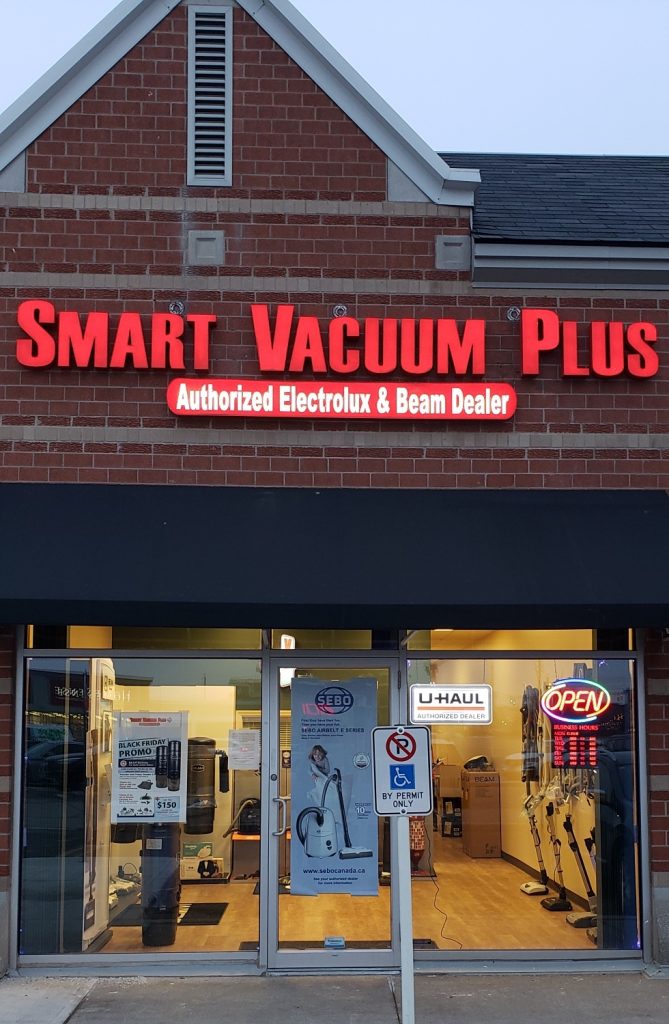
If you need central vacuum service in Milton, Mississauga, Oakville, or the GTA. Smart Vacuum Plus provides central vacuum installation, service calls, repairs, outlet add-ons, and related home services.
Prevention: How to Keep Suction Strong Year-Round
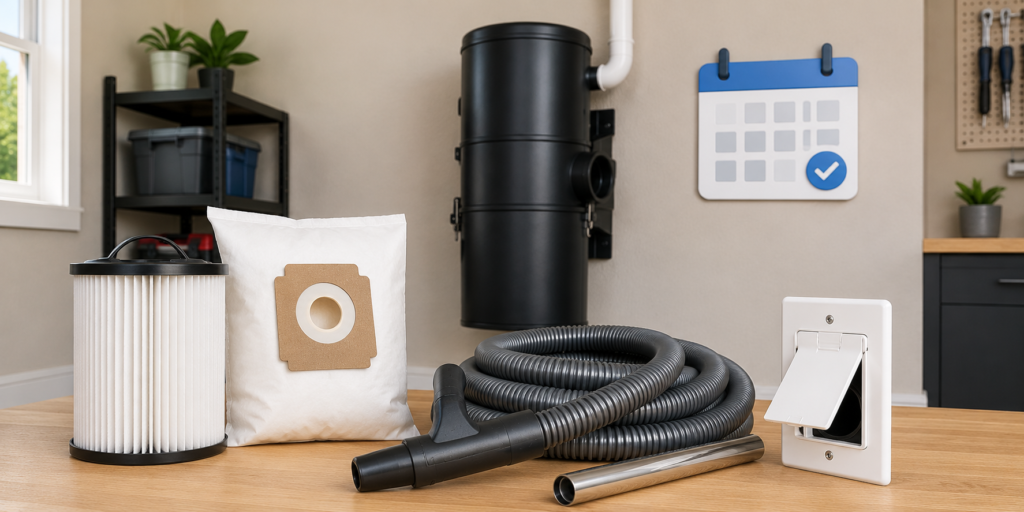
A central vacuum usually loses suction because airflow gets blocked or leaks out. A simple care plan can stop most problems early.
Monthly:
- Check the bag or bin.
- Look at the hose for cracks.
- Test suction at one wall inlet.
Every 3 to 6 months:
- Clean or replace the filter.
- Check wall inlet doors.
- Clean around the power unit.
- Look at visible pipe joints.
Once a year:
- Test every wall inlet.
- Check the hose cuff.
- Check the powerhead brush roll.
- Book a service if suction has dropped.
A clean filter, clear hose, and sealed system protect the motor. They also help the vacuum pick up dirt faster, so you spend less time cleaning. That is the dream. Well, a small dream, but still.
Conclusion
Start with the power unit. That one test tells you where to look next.
If suction is weak at the unit, check the bag, bin, filter, lid, gasket, and motor. If suction is strong at the unit, move to the hose, inlet, and pipe. Most suction problems are not mysterious. They are clogs, leaks, dirty filters, or worn parts trying to look dramatic.
Frequently Asked Questions
Start at the power unit. If suction is weak there, check the bag, bin, filter, lid, gasket, and motor. If suction is strong there, check the hose, wall inlets, and pipes.
Many central vacuum systems can last for many years when they are cleaned, serviced, and used with the right bags, filters, and hoses. If the motor fails often or the suction keeps dropping after repair, it may be time to compare repair costs with replacement costs.
A simple hose clog may cost nothing if you clear it yourself. A pro clog removal often costs about $50 to $250, based on public repair cost ranges.
Restore airflow. Empty the bin, replace the bag, clean the filter, clear the hose, close open inlets, and check for leaks. If that fails, test the suction at the power unit.
The system may have an air leak, a loose lid, a bad gasket, an open inlet, a blocked hose, a blocked pipe, or a disconnected intake pipe. Test the suction at the main unit first.
Some systems exhaust air outside or through a vent. But if air is blowing from the wrong place, check the gasket, lid, pipe seal, and unit connection.
Warning signs include weak suction at the unit, a burning smell, a grinding sound, clicking without startup, or repeated shut-offs. A technician can test the motor and relay.
A practical range is every 3 to 6 months for many systems. Always check your owner’s manual because filter type matters.